
- Also known as
- Wolverine blend · Wolverine peptide · BPC 157 TB 500 · BPC-157/TB-500 · BPC 157 and TB 500 blend
- Class
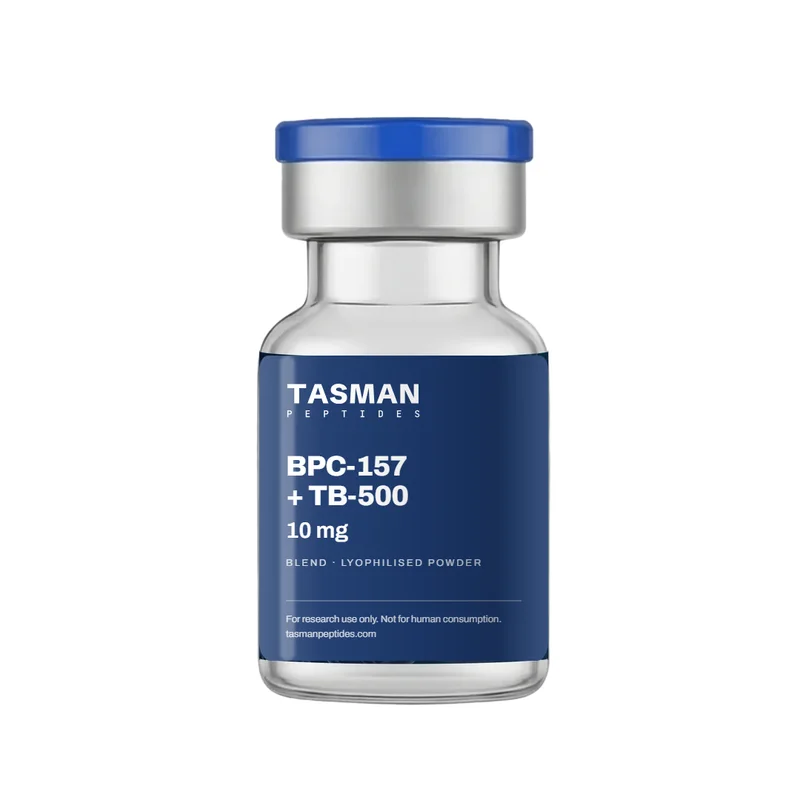
- Two-peptide research blend (1:1 by mass)
- Form
- Lyophilised powder, 10 mg vial (BPC-157 5 mg + TB-500 5 mg)
- Sizes
- 10 mg
- Storage, dry
- −20 °C, dry and dark
- Storage, mixed
- 2–8 °C, use within 28 days of mixing (as generally reported for reconstituted peptides)
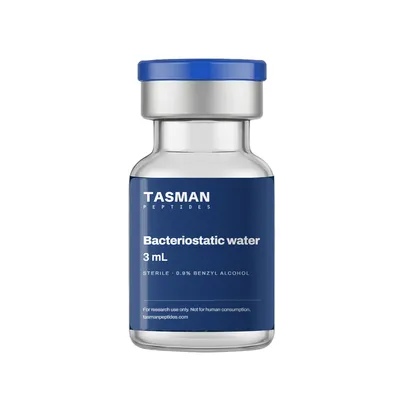
- BAC water per size
- 10 mg: 2 mL
What's in the vial
Wolverine blend or Wolverine stack?
Wolverine blend or Wolverine stack? They hold the same two peptides in a different layout. The blend is one 10 mg vial with BPC-157 and TB-500 already combined at 5 mg each, so a single reconstitution gives both at a fixed 1:1 ratio. The Wolverine stack, at /kits/wolverine-stack/, is two separate vials: BPC-157 10 mg and TB-500 10 mg. That is 20 mg of peptide in total, and because each vial is mixed on its own, the amount of each can be set independently. Researchers who want a fixed ratio from one vial tend to choose the blend. Those who want to vary one peptide, or run each alone as a control, tend to choose the stack.
What is Wolverine?
The Wolverine blend is a pre-mixed vial of two research peptides, BPC-157 and TB-500, at 5 mg each. BPC-157 is a 15-amino-acid peptide derived from a protein in human gastric juice. It has been studied mostly in rats, in gut, tendon, muscle, blood vessel and spinal cord injury models. TB-500 is a supplier name for material related to thymosin beta-4, a 43-amino-acid actin-binding peptide studied mostly in mice, in heart, liver, lung and eardrum models. The pairing is common in the research market because both peptides are studied in tissue injury and repair models. The research below was done on each peptide separately. No published study has tested this blend, and the only record that gave both to the same people was a small retrospective knee pain review.
What the research shows
| Study | Component | Model | Dose used | Duration | Finding |
|---|---|---|---|---|---|
| Lee E et al.2021 · Altern Ther Health Med · PMID 34324435 | BPC-157 | Human, retrospective chart review with phone survey (n=16, knee pain); 4 of the 16 received BPC-157 and TB4 | Intra-articular BPC-157 alone (n=12) or BPC-157 and TB4 as two peptide injections (n=4); amounts not stated in the abstract | Most patients surveyed 6 months to 1 year after the injection | Eleven of 12 given BPC-157 alone reported significant improvement in knee pain. Of the 4 given both peptides, 75% reported significant improvement and 25% had no relief. No specific tools were used to measure function or quality of life, and there was no control group. |
| Lee E et al.2024 · Altern Ther Health Med · PMID 39325560 | BPC-157 | Human, uncontrolled pilot study (n=12 women with interstitial cystitis), private clinic | 10 mg total, given by injection around the inflamed area of the bladder during cystoscopy | Single procedure; follow-up period not stated in the abstract | Ten of 12 patients reported complete resolution of symptoms and 2 of 12 rated their success at 80%. No adverse events were reported. The study had no control group. |
| Lee E et al.2025 · Altern Ther Health Med · PMID 40131143 | BPC-157 | Human, safety pilot (n=2 adults), private clinic | 10 mg in 250 cc normal saline over one hour on day 1, then 20 mg on day 2 (intravenous) | 3 days | The infusions produced no measurable effects on the tested heart, liver, kidney and thyroid biomarkers or blood glucose, and no side effects were reported. |
| Perovic D et al.2019 · J Orthop Surg Res · PMID 31266512 | BPC-157 | Rat, spinal cord compression injury model | 200 or 2 μg/kg, one intraperitoneal injection 10 min after injury | Assessed at 1, 4, 7, 15, 30, 90, 180 and 360 days | Injured rats given BPC-157 showed better tail motor function, no autotomy and resolved spasticity by day 15, with less axon loss, oedema and motoneuron loss on microscopy. |
| Maar K et al.2025 · Int J Mol Sci · PMID 40362372 | TB-500 | Mouse, permanent coronary ligation (heart attack) model; human cardiac cells | Systemic TB4 injection; amount not stated in the abstract | Not stated in the abstract | TB4 raised miR139-5p expression and modulated ROCK1 protein levels in mouse hearts and human cardiac cells, and may reverse or inhibit fibroblast-to-myofibroblast transformation. |
| Li H et al.2018 · J Gene Med · PMID 29972714 | TB-500 | Mouse, CCl4-induced liver fibrosis model (gene delivery, not peptide); liver cells in vitro | Intraperitoneal adeno-associated virus encoding Tβ4 (AAV-Tβ4); amount not stated in the abstract | Not stated in the abstract | AAV-Tβ4 pre-treatment significantly reduced liver injury, collagen deposition, stellate cell activation and pro-fibrotic cytokines. |
| Li Y et al.2025 · J Allergy Clin Immunol · PMID 39978686 | TB-500 | Mouse, house dust mite allergic asthma model (BDCA2-DTR mice); cell experiments | Tβ4 supplementation; amount not stated in the abstract | Not stated in the abstract | Tβ4 supplementation reversed the worsened asthma phenotype in mice depleted of plasmacytoid dendritic cells, and Tβ4 inhibited IL-4/IL-13-induced JAK1/STAT6 signalling in macrophages. |
| Sun YS et al.2025 · World J Gastroenterol · PMID 41278163 | TB-500 | Human colonic mucus (IBS patients); mouse and rat (Tβ4-deficient) models | Not stated in the abstract | Not stated in the abstract | Tβ4 treatment of mice reduced tight junction proteins in the gut lining, and Tβ4 released from mast cells under stress disrupted the intestinal epithelial barrier. |
What these studies don't show: No published study has tested BPC-157 and TB-500 as a blend, in one vial or at a 1:1 ratio. The nearest record is a retrospective knee pain review in which 4 patients received both peptides, with no control group and no stated amounts. Every other row here tested one peptide alone, mostly in rats or mice, so nothing shows whether the two add to, cancel or change each other's effects, or how they behave when stored mixed together.
Every study links to its PubMed record. See all Wolverine studies in the research library →
Wolverine price in Australia: 10mg vial
Buy BPC 157 TB 500 (Wolverine) in Australia in a 10mg vial and a starter kit. Prices are in AUD, you pay by PayID or bank transfer, and orders are dispatched from Australian stock.
| Size | Price | Per mg | BAC water (example) |
|---|---|---|---|
| 10 mg | $109.99 | $11.00/mg | 2 mL |
The BAC water column is an example volume for the maths only. Open the calculator (pre-set for Wolverine).
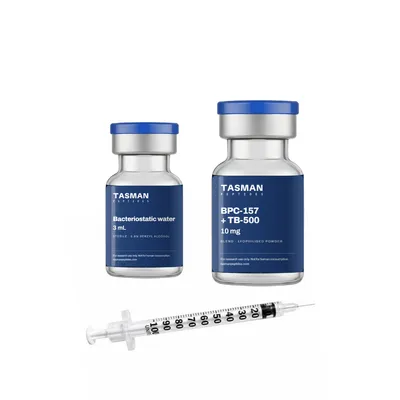
Starter kit
Is Wolverine available in Australia?
Neither BPC-157 nor TB-500 is registered on the ARTG, and there is no TGA-approved product containing either peptide or the blend. Combining them in one vial does not change the status of either component. Tasman supplies the Wolverine blend only as a research material for laboratory work, not for human use. How the TGA treats research peptides →
Side effects reported in studies
No study has reported side effects for the blend, because none has tested it. For the components, the small BPC-157 human pilots recorded no adverse events, while mouse and tissue studies link high thymosin beta-4 to gut barrier disruption and cancer cell growth.
Reconstitution
| Vial | BAC water (example) | Concentration |
|---|---|---|
| 10 mg | 2 mL | 5 mg/mL |
Wolverine FAQ
Where can I buy BPC 157 TB 500 in Australia?
Tasman supplies the BPC-157 and TB-500 blend from Australian stock for laboratory research only. It comes as a 10 mg vial of lyophilised powder holding 5 mg of each peptide, tested by HPLC before dispatch. Neither peptide is registered on the ARTG, and the blend is not sold for human or veterinary use.
Is there a Wolverine stack in Australia?
Yes. Tasman sells the Wolverine stack at /kits/wolverine-stack/ as two separate vials, BPC-157 10 mg and TB-500 10 mg, dispatched from Australian stock. The Wolverine blend on this page holds the same two peptides pre-combined in one 10 mg vial. Both are supplied for laboratory research only.
Has the BPC-157 and TB-500 combination been studied?
No published study has tested BPC-157 and TB-500 as a blend. The only record in our library where people received both is a retrospective knee pain review, in which 4 patients had both peptides injected, with no control group and no stated amounts. Everything else was done on one peptide at a time.
What is the Wolverine blend studied for?
The blend itself has not been studied. Its components have: BPC-157 mostly in rat models of gut, tendon, muscle, blood vessel and spinal cord injury, and thymosin beta-4 mostly in mouse models of heart remodelling, liver fibrosis, asthma and eardrum cell repair. Human data are three small uncontrolled BPC-157 reports.
Why is it called the Wolverine blend?
Wolverine is a nickname used in the research-peptide market for the BPC-157 and TB-500 pairing, borrowed from the comic-book character known for fast recovery. It is a trade name only. It does not describe any measured result, and no study has tested the pairing as a blend.
How much of each peptide is in the vial?
Each 10 mg vial holds 5 mg of BPC-157 and 5 mg of TB-500, a 1:1 ratio by mass. Using this site's neutral maths default of 2 mL for a 10 mg vial, that works out to 2.5 mg of each peptide per mL. The reconstitution calculator shows the concentration for any other volume.
How should the Wolverine blend be stored?
Dry powder is stored at −20 °C, kept dry and away from light. Once mixed, reconstituted peptides are generally reported to be kept at 2–8 °C and used within 28 days. No study in our records measured how the two peptides behave when stored mixed together, so the general figures are all that can be given.
Is the Wolverine blend legal in Australia?
Neither BPC-157 nor TB-500 is registered on the ARTG, and there is no TGA-approved product containing either one. Putting them in one vial does not change the status of either component. Tasman supplies the blend only as a research material for laboratory work, not for human use.
How much is BPC 157 TB 500 per mg?
The size table on this page shows the per-mg figure for the 10 mg blend vial. The Wolverine stack holds 20 mg across two vials, so its per-mg figure is worked out separately on the kit page. No prices are quoted in this answer because they are kept current in the table.
Is there a Wolverine starter kit?
Yes. The Wolverine starter kit pairs the 10 mg blend vial with the supplies used to reconstitute it for laboratory work, and the kit page lists exactly what is in the box. It is supplied for research use only, like the vial on its own.
Compare with
Related compounds
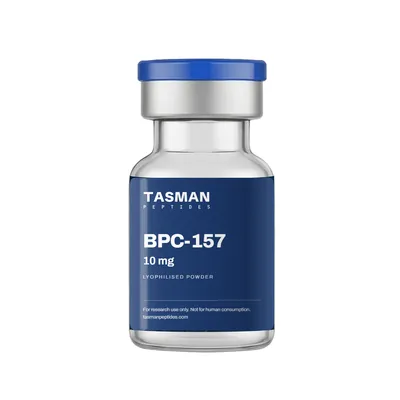
BPC-157
Synthetic pentadecapeptide derived from a gastric protein
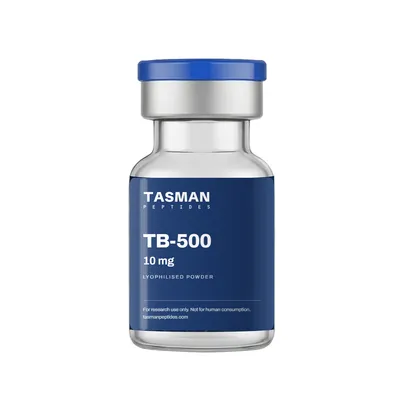
TB-500
Thymosin beta-4 related peptide (actin-binding)
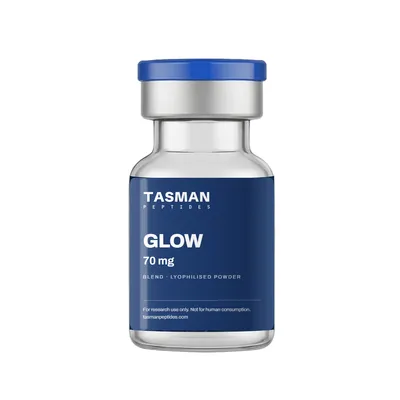
GLOW blend
Three-peptide research blend: a copper tripeptide, a gastric pentadecapeptide and a thymosin beta-4 related peptide
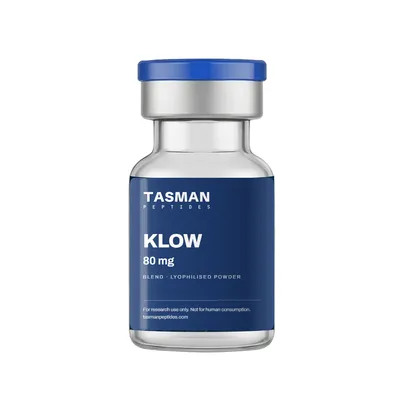
KLOW
Four-peptide research blend (GHK-Cu, BPC-157, TB-500, KPV)