
- Also known as
- NAD · Nicotinamide adenine dinucleotide · β-NAD+
- Class
- Redox coenzyme; dinucleotide (not a peptide)
- Form
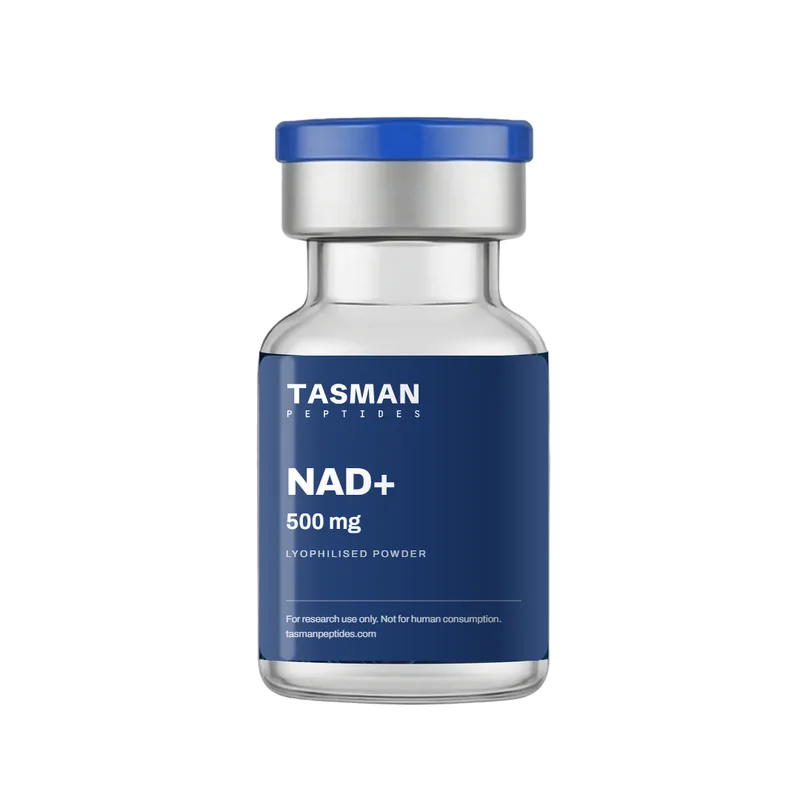
- 10 mL vial, 500 mg or 1000 mg
- Sizes
- 500 mg · 1 g
- Storage, dry
- −20 °C, dry and dark
- Storage, mixed
- 2–8 °C once in solution, use within 28 days (as generally reported for reconstituted research materials)
- BAC water per size
- 500 mg: 10 mL · 1000 mg: 10 mL
- Molecular weight
- 663.4 g/mol (NAD+, C21H27N7O14P2)
What is NAD+?
NAD+ (nicotinamide adenine dinucleotide) is a coenzyme found in all living cells. It carries electrons between reduction-oxidation reactions, cycling between its oxidised form (NAD+) and reduced form (NADH), and it is consumed as a substrate by signalling enzymes such as the sirtuins and poly(ADP-ribose) polymerases. Reviews report that NAD+ levels fall with age and in several diseases. It is not a peptide: it is a dinucleotide built from two nucleotides joined through their phosphate groups. The body makes it from vitamin B3 forms and from precursors such as nicotinamide riboside (NR) and nicotinamide mononucleotide (NMN). Most human studies on this subject gave those oral precursors, or oral NADH, rather than NAD+ itself, and this page says which molecule each study used.
What the research shows
| Study | Model | Dose used | Duration | Finding |
|---|---|---|---|---|
| Christen S et al.2026 · Nat Metab · PMID 41540253 | Human, randomised open-label placebo-controlled study (n=65, healthy adults); molecules: oral NR, NMN and nicotinamide | Not stated in the abstract | 14 days | NR and NMN, but not nicotinamide, comparably raised circulating NAD+. Ex vivo work suggested NR and NMN are converted by gut microbes to nicotinic acid, which then raises NAD+. |
| Pencina KM et al.2023 · J Clin Endocrinol Metab · PMID 36740954 | Human, randomised controlled trial (n=30, overweight or obese adults aged 45+); molecule: oral NMN (MIB-626 tablets) | Two 500 mg NMN tablets twice daily | 28 days | NMN substantially raised circulating NAD+ and its metabolites. Body weight (−1.9 kg), diastolic blood pressure, total and LDL cholesterol fell more than with placebo; muscle strength, aerobic capacity, insulin sensitivity and liver fat did not differ. |
| Brakedal B et al.2022 · Cell Metab · PMID 35235774 | Human, randomised double-blind phase I trial (n=30, newly diagnosed Parkinson's disease); molecule: oral NR | 1,000 mg NR | 30 days | NR was well tolerated and gave a significant but variable rise in brain NAD measured by 31P-MRS, altered cerebral metabolism on FDG-PET in those whose brain NAD rose, and lowered inflammatory cytokines in serum and cerebrospinal fluid. |
| Elhassan YS et al.2019 · Cell Rep · PMID 31412242 | Human, randomised double-blind crossover trial (n=12, aged men); molecule: oral NR | 1 g NR per day | 21 days | NR raised the skeletal muscle NAD+ metabolome and lowered circulating inflammatory cytokines, without altering mitochondrial bioenergetics. |
| Vreones M et al.2023 · Aging Cell · PMID 36515353 | Human, randomised placebo-controlled crossover trial (n=22, healthy older adults); molecule: oral NR | 500 mg NR twice a day | 6 weeks | NR increased NAD+ in plasma extracellular vesicles enriched for neuronal origin and lowered their levels of Aβ42, pJNK and pERK1/2. |
| Katayoshi T et al.2023 · Sci Rep · PMID 36797393 | Human, randomised double-blind placebo-controlled trial (n=36, healthy middle-aged adults); molecule: oral NMN | 125 mg NMN capsule twice a day (250 mg/day) | 12 weeks | Serum nicotinamide rose in the NMN group. Pulse wave velocity tended to fall but did not differ significantly from placebo; no adverse events were reported. |
| Martens CR et al.2018 · Nat Commun · PMID 29599478 | Human, randomised double-blind placebo-controlled crossover trial (healthy middle-aged and older adults; n not stated in the abstract); molecule: oral NR | Not stated in the abstract | 2 × 6 weeks | Chronic NR was well tolerated and stimulated NAD+ metabolism; the authors suggest blood pressure and arterial stiffness as outcomes for future trials. |
| Castro-Marrero J et al.2021 · Nutrients · PMID 34444817 | Human, randomised double-blind placebo-controlled trial (n=207, ME/CFS); molecule: oral NADH combined with CoQ10 | 20 mg NADH plus 200 mg CoQ10 once daily | 12 weeks | Within the treatment group, cognitive fatigue and overall FIS-40 score fell and quality of life improved from baseline; the effect of NADH cannot be separated from that of CoQ10. |
What these studies don't show: None of these records studies NAD+ itself given by injection or infusion: the human trials used oral precursors (NR, NMN, nicotinamide) or oral NADH combined with CoQ10, so their results cannot be transferred directly to NAD+ in solution. The trials are small (12 to 65 people in most) and short (two to twelve weeks), and they mostly measure NAD+ levels and biomarkers rather than clinical outcomes. A 2024 review also notes that much about NAD+ biology, including how the gut microbiome handles precursors, is still poorly understood.
Every study links to its PubMed record. See all NAD+ studies in the research library →
NAD+ price in Australia: 500mg and 1g vials
Buy NAD+ in Australia in 2 vial sizes and a starter kit. Prices are in AUD, you pay by PayID or bank transfer, and orders are dispatched from Australian stock.
| Size | Price | Per mg | BAC water (example) |
|---|---|---|---|
| 500 mg | $129.99 | $0.26/mg | 10 mL |
| 1 g | $199.99 | $0.20/mg | 10 mL |
The BAC water column is an example volume for the maths only. Open the calculator (pre-set for NAD+).
Starter kit
Is NAD+ available in Australia?
NAD+ as supplied here is not registered on the ARTG, and there is no TGA-approved NAD+ product. Tasman supplies it as a research chemical for laboratory use only. It is not sold for human or veterinary use. How the TGA treats research peptides →
Side effects reported in studies
In the human trials, oral NAD+ precursors (NR and NMN) were well tolerated: adverse events were similar to placebo, and one 12-week NMN trial reported none. A systematic review of NADH and precursor trials listed muscle pain, nervous disorders, fatigue, sleep disturbance and headache as the most common side effects, none serious; no record here studies NAD+ given by injection. Read more →
Doses used in studies
No study in these records gave NAD+ itself by injection or infusion, so there is no study-derived injection dosage chart for NAD+. The table lists what the human trials actually used: oral NR at 1,000 mg a day, oral NMN from 250 mg to two 500 mg tablets twice daily, and oral NADH at 20 mg a day with CoQ10, over 14 days to 12 weeks. These are reported study doses of different molecules, not guidance for the 500 mg or 1000 mg NAD+ vials. Read more →
Reconstitution
| Vial | BAC water (example) | Concentration |
|---|---|---|
| 500 mg | 10 mL | 50 mg/mL |
| 1000 mg | 10 mL | 100 mg/mL |
NAD+ FAQ
What is NAD+ studied for?
NAD+ is studied mainly in relation to ageing, metabolism and neurodegeneration, because reviews report that its levels fall with age and in several diseases. Human trials have tested whether oral precursors such as NR and NMN raise NAD+ and change markers of cardiometabolic health, muscle metabolism, inflammation and brain metabolism, including a phase I trial of NR in Parkinson's disease.
Is there research on NAD+ 500 mg injections?
None of the studies in these records gave NAD+ by injection or infusion, at 500 mg or any other amount. The human trials used oral precursors (nicotinamide riboside and nicotinamide mononucleotide) or oral NADH with CoQ10. The dosage table on this page lists those study doses, which belong to different molecules and routes and are not a guide to the NAD+ vials.
What side effects were reported in NAD+ studies?
Oral NR and NMN were well tolerated, with adverse events similar to placebo. A systematic review of 10 trials of NADH and precursors listed muscle pain, nervous disorders, fatigue, sleep disturbance and headache as the most common side effects, none serious. Flushing was seen with niacin in a one-day study. No record here reports on injected NAD+.
Where can I buy NAD+ in Australia?
Tasman Peptides supplies research-grade NAD+ from Australian stock for laboratory research only. It comes in 10 mL vials holding 500 mg or 1000 mg, and each batch is tested by HPLC. It is not sold for human or veterinary use, and it is not a registered medicine in Australia.
Is NAD+ legal in Australia?
NAD+ as supplied here is not registered on the ARTG, and there is no TGA-approved NAD+ product. Tasman supplies it only as a research chemical for laboratory use. It is not for human consumption, and this site does not give advice on obtaining it as a medicine.
What is the difference between the 500 mg and 1000 mg NAD+ vials?
Both are 10 mL vials; the 1000 mg vial holds twice the NAD+ of the 500 mg vial. Across the same 10 mL that works out to 50 mg per mL for the 500 mg vial and 100 mg per mL for the 1000 mg vial. The site's calculator does the concentration maths for other volumes.
How much is NAD+ per mg?
The cost per mg depends on the vial size. The size table on this page lists the 500 mg and 1000 mg vials side by side, so the per-mg figure for each can be read directly.
How should NAD+ be stored?
Keep NAD+ at −20 °C, sealed and protected from light and moisture. Once in solution, keep it at 2–8 °C and use it within 28 days, as is generally reported for reconstituted research materials. Avoid repeated freeze-thaw cycles.
NAD+ vs NMN vs NR: what is the difference?
NAD+ is the coenzyme itself; NMN and NR are precursors the body converts into NAD+. Most human trials used the precursors by mouth. A 2026 randomised study of 65 adults found NR and NMN raised circulating NAD+ comparably over 14 days, while nicotinamide did not, and ex vivo work pointed to conversion by gut microbes.
Does the NAD+ vial come with a starter kit?
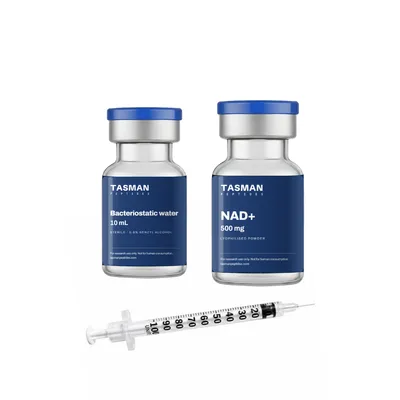
Yes, NAD+ has a starter kit on this site, as every single-compound vial does. The kit groups the vial with the laboratory supplies usually needed to handle it. It is supplied for research use only.
Compare with
Related compounds
MOTS-C
Mitochondrial-derived peptide
SS-31
Mitochondria-targeting tetrapeptide (cardiolipin binder)
Glutathione
Endogenous tripeptide antioxidant (thiol)
5-Amino-1MQ
Small-molecule nicotinamide N-methyltransferase (NNMT) inhibitor