
Nootropic research peptides
Nootropic research here means Semax and Selank, two synthetic heptapeptides developed by Russian groups. Semax is an ACTH(4-10) analogue without hormonal activity, studied mostly in ischaemic stroke patients by the intranasal route. Selank is a tuftsin analogue described as a peptide anxiolytic and studied in anxiety disorders. Both carry the same Pro-Gly-Pro tail, and the Semax + Selank blend holds both.

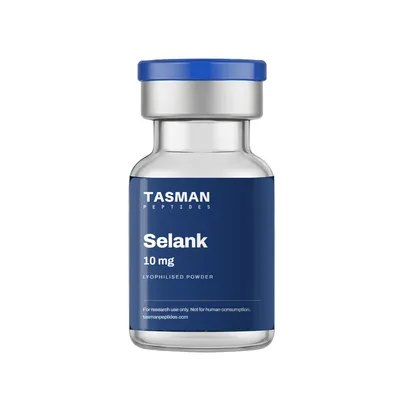
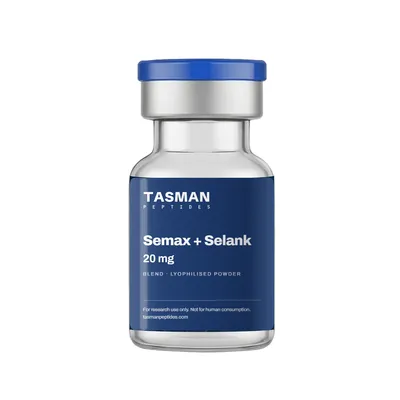
How these compare
| Compound | Class | Sizes | From |
|---|---|---|---|
| Semax | Synthetic ACTH(4-10) analogue (heptapeptide) | 10 mg | $69.99 |
| Selank | Synthetic tuftsin analogue (heptapeptide) | 10 mg | $94.99 |
| Semax + Selank | Two-peptide research blend (ACTH(4-10) analogue + tuftsin analogue) | 20 mg | $139.99 |
FAQ
What is the difference between Semax and Selank?
Semax is built from the ACTH(4-7) fragment and has been studied mostly in stroke and cerebrovascular patients. Selank is built on tuftsin and has been studied mostly in generalised anxiety disorder and neurasthenia. Both end in Pro-Gly-Pro, and most human data on both come from small Russian clinical studies.
Are Semax and Selank legal in Australia?
Neither is registered on the ARTG, and there is no TGA-approved product containing either one. We supply both, and the Semax + Selank blend, for laboratory research only, not for human or veterinary use.
Semax nasal spray or vials?
Semax and Selank each come as 10 mg vials of lyophilised powder and as nasal sprays. Most of the published clinical work on Semax used the intranasal route. The nasal-spray pages set out how the two formats differ.
What is in the Nootropic kit?
Semax 10 mg and Selank 10 mg, as vials or as nasal sprays. The Semax + Selank blend is different: both peptides pre-mixed in one 20 mg vial.