
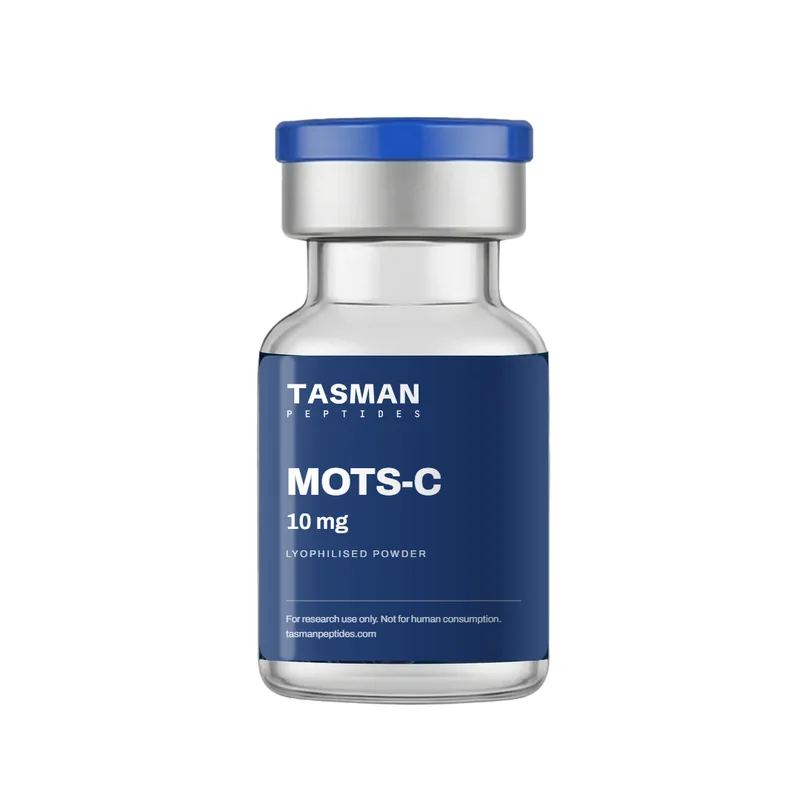
- Also known as
- MOTS-c · MOTSc · Mitochondrial ORF of the 12S rRNA type-c
- Class
- Mitochondrial-derived peptide (16 amino acids)
- Form
- Lyophilised powder
- Sizes
- 10 mg · 40 mg
- Storage, dry
- −20 °C, dry and dark
- Storage, mixed
- 2–8 °C, use within 28 days of mixing (as generally reported for reconstituted peptides)
- BAC water per size
- 10 mg: 2 mL · 40 mg: 3 mL
What is MOTS-C?
MOTS-c is a 16-amino-acid peptide encoded by a short open reading frame inside the mitochondrial 12S rRNA gene, first described by Lee and colleagues in 2015. It belongs to a small group of mitochondrial-derived peptides that also includes humanin. In the original mouse and cell work its main target appeared to be skeletal muscle, where it inhibited the folate cycle and de novo purine synthesis, which led to AMPK activation. Later cell work showed that under metabolic stress, such as glucose restriction, MOTS-c moves into the nucleus and regulates nuclear genes, including those carrying antioxidant response elements, in part by interacting with NRF2. MOTS-c is found in human plasma, and reviews report that circulating levels fall with age. Almost all of the functional evidence comes from rodent and cell studies.
What the research shows
| Study | Model | Dose used | Duration | Finding |
|---|---|---|---|---|
| Lee C et al.2015 · Cell Metab · PMID 25738459 | Mouse, high-fat diet and ageing models; cell work | Not stated in the abstract | Not stated in the abstract | The paper that named MOTS-c. Its primary target appeared to be skeletal muscle, where it inhibited the folate cycle and de novo purine biosynthesis and activated AMPK; MOTS-c treatment in mice prevented age-dependent and high-fat-diet-induced insulin resistance and diet-induced obesity. |
| Kim KH et al.2018 · Cell Metab · PMID 29983246 | Cell culture (metabolic stress models) | Not stated in the abstract | Not stated in the abstract | Under metabolic stress MOTS-c translocated to the nucleus in an AMPK-dependent manner and regulated a broad range of genes in response to glucose restriction, including antioxidant response element genes, and interacted with NRF2. |
| Li X et al.2025 · Redox Biol · PMID 40403491 | Rat, lung ischaemia-reperfusion injury model; human cardiopulmonary bypass patients (serum levels) | Not stated in the abstract | Serum measured within 24 h after bypass | Exogenous MOTS-c in rats reduced oxidative damage, inflammation, lung injury and mortality. In patients, the rise in serum MOTS-c within 24 h of bypass predicted ARDS (multivariate model AUC 0.885). |
| Lin C et al.2024 · Gut · PMID 37788894 | Human observational cohort (85 healthy subjects, 404 HBV patients) plus HBV-infected mice and cells | Not stated in the abstract | Not stated in the abstract | MOTS-c levels correlated negatively with HBV DNA (R = −0.71). In mice and cells MOTS-c inhibited HBV replication by 50–70% with improved liver function and no notable toxicity, and promoted mitochondrial biogenesis and MAVS signalling. |
| Yin Y et al.2024 · Adv Sci (Weinh) · PMID 39321430 | Ovarian cancer cell lines and mouse xenograft; patient serum and tumour tissue | Not stated in the abstract | Not stated in the abstract | MOTS-c levels were lower in serum and tumour tissue from ovarian cancer patients. Exogenous MOTS-c inhibited ovarian cancer cell proliferation, migration and invasion and showed an anti-tumour effect in vivo without systemic toxicity, by promoting LARS1 degradation. |
| Li K et al.2025 · Free Radic Biol Med · PMID 41043625 | Chondrocytes (LPS-induced) and mouse osteoarthritis model | Not stated in the abstract | Not stated in the abstract | MOTS-c improved mitochondrial dysfunction and reduced chondrocyte pyroptosis via the Nrf2/TXNIP/NLRP3 axis, and on imaging and histology delayed cartilage degeneration in the mouse model. |
| Wu J et al.2023 · Acta Biochim Biophys Sin (Shanghai) · PMID 36786072 | LPS-induced septic cardiomyopathy model (species not stated in the abstract) | Not stated in the abstract | Not stated in the abstract | MOTS-c reduced inflammatory cytokine mRNA in cardiomyocytes, lowered circulating CK-MB and TnT, and reduced cardiomyocyte apoptosis; the AMPK inhibitor compound C abolished these effects. |
What these studies don't show: None of these abstracts reports a controlled trial of MOTS-c given to people. The human data are observational: they measure circulating MOTS-c levels in patient groups and relate them to disease, which is not the same as showing an effect of added MOTS-c. The interventional work is in mice, rats and cultured cells, mostly in acute injury or diet models, and none of the abstracts states the doses or durations used.
Every study links to its PubMed record. See all MOTS-C studies in the research library →
MOTS-C price in Australia: 10mg and 40mg vials
Buy MOTS-C in Australia in 2 vial sizes and a starter kit. Prices are in AUD, you pay by PayID or bank transfer, and orders are dispatched from Australian stock.
| Size | Price | Per mg | BAC water (example) |
|---|---|---|---|
| 10 mg | $94.99 | $9.50/mg | 2 mL |
| 40 mg | $159.99 | $4.00/mg | 3 mL |
The BAC water column is an example volume for the maths only. Open the calculator (pre-set for MOTS-C).
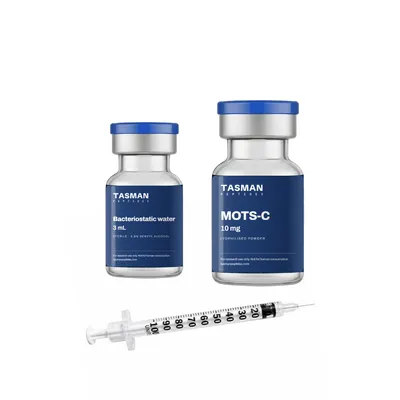
Starter kit
Is MOTS-C available in Australia?
MOTS-c is not registered on the ARTG, and there is no TGA-approved MOTS-c product in Australia. It is supplied here as a research chemical for laboratory use only. It is not sold for human or veterinary use. How the TGA treats research peptides →
Side effects reported in studies
The studied benefits of MOTS-c come from animal and cell work: in the original mouse study it prevented diet-induced obesity and insulin resistance, and later rodent studies reported less tissue injury in lung, joint and heart models. Two mouse studies reported no notable or systemic toxicity, but no human trial of added MOTS-c appears in these records. Read more →
Doses used in studies
None of the MOTS-c abstracts in these records states the dose, frequency or duration used, so the table below reports the model and marks each value as not stated. A 2025 review (Fang et al.) states that it compiles the different doses and dosing schedules of exogenous MOTS-c used in preclinical metabolic studies, but its abstract does not give the figures. No human dosing data exist in these records. Read more →
Reconstitution
| Vial | BAC water (example) | Concentration |
|---|---|---|
| 10 mg | 2 mL | 5 mg/mL |
| 40 mg | 3 mL | 13.33 mg/mL |
MOTS-C FAQ
What is MOTS-c studied for?
MOTS-c is mainly studied for its effects on glucose metabolism and insulin sensitivity. The 2015 mouse study that named it reported that it prevented diet-induced obesity and age-related insulin resistance. Later rodent and cell studies looked at lung ischaemia-reperfusion injury, osteoarthritis, septic heart injury, hepatitis B infection and ovarian cancer. Reviews also discuss it as a possible exercise mimetic and in relation to ageing, because circulating levels fall with age.
What are the benefits of MOTS-c in research?
The reported benefits come from animal and cell studies, not human trials. In mice, MOTS-c prevented high-fat-diet obesity and insulin resistance. In rats it reduced lung injury and mortality after ischaemia-reperfusion, and in mice it delayed cartilage degeneration in an osteoarthritis model. The human studies in these records only measure the body's own MOTS-c levels and relate them to disease.
Where can I buy MOTS-c in Australia?
Tasman Peptides supplies research-grade MOTS-c from Australian stock for laboratory research only. It comes as a lyophilised powder in 10 mg and 40 mg vials, and each batch is tested by HPLC. It is not sold for human or veterinary use, and it is not a registered medicine in Australia.
Is MOTS-c legal in Australia?
MOTS-c is not registered on the ARTG, and there is no TGA-approved MOTS-c product. Tasman supplies it only as a research chemical for laboratory use. It is not for human consumption, and this site does not give advice on obtaining it as a medicine.
How much is MOTS-c per mg?
The cost per mg depends on the vial size. The size table on this page lists the 10 mg and 40 mg vials side by side, so the per-mg figure for each can be read directly. The larger vial holds four times the peptide of the smaller one.
What is the difference between the 10 mg and 40 mg MOTS-c vials?
The difference is the amount of peptide in the vial; the material is the same. For reconstitution maths, the site uses a neutral default of 2 mL of bacteriostatic water for the 10 mg vial and 3 mL for the 40 mg vial, which changes the concentration per mL. The site's calculator works out the figures for any volume.
What dose of MOTS-c was used in studies?
The abstracts in these records do not state the doses used. The founding mouse study and the later rat and mouse injury studies report outcomes but not dose, frequency or duration in their abstracts. A 2025 review compiles the doses and schedules used in preclinical metabolic studies, but the figures are not in its abstract. There are no human dosing data.
How should MOTS-c be stored?
Store the dry powder at −20 °C, sealed and away from light and moisture. Once reconstituted, keep it at 2–8 °C and use it within 28 days, as is generally reported for reconstituted peptides. Avoid repeated freeze-thaw cycles of the mixed solution.
Does the MOTS-c vial come with a starter kit?
Yes, MOTS-c has a starter kit on this site, as every single-compound vial does. The kit groups the vial with the laboratory supplies usually needed to reconstitute and handle a lyophilised peptide. It is supplied for research use only.
MOTS-c vs SS-31: what is the difference?
Both are studied in relation to mitochondria, but they are different kinds of molecule. MOTS-c is a peptide the mitochondrial genome itself encodes, and it acts as a signal: it activates AMPK and moves to the nucleus to regulate genes. SS-31 is a synthetic tetrapeptide designed to sit in the inner mitochondrial membrane. The evidence for each is on its own page.
Compare with
Related compounds
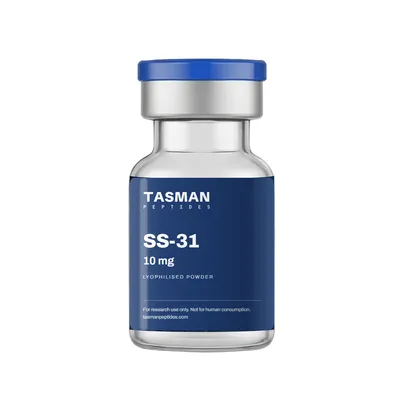
SS-31
Mitochondria-targeting tetrapeptide (cardiolipin binder)
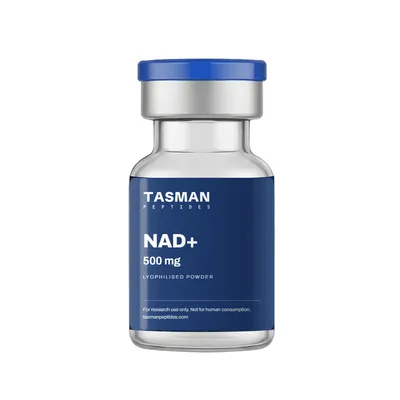
NAD+
Redox coenzyme (dinucleotide), not a peptide
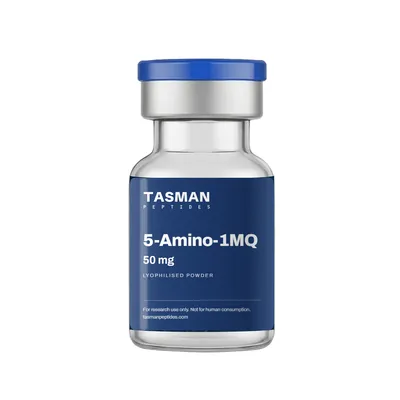
5-Amino-1MQ
Small-molecule nicotinamide N-methyltransferase (NNMT) inhibitor
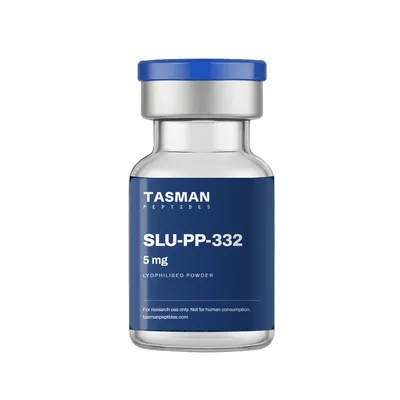
SLU-PP-332
Synthetic pan-ERR (ERRα/β/γ) agonist, small molecule