
- Also known as
- BPC 157 · BPC157 · Body Protection Compound 157 · stable gastric pentadecapeptide
- Class
- Synthetic pentadecapeptide
- Form
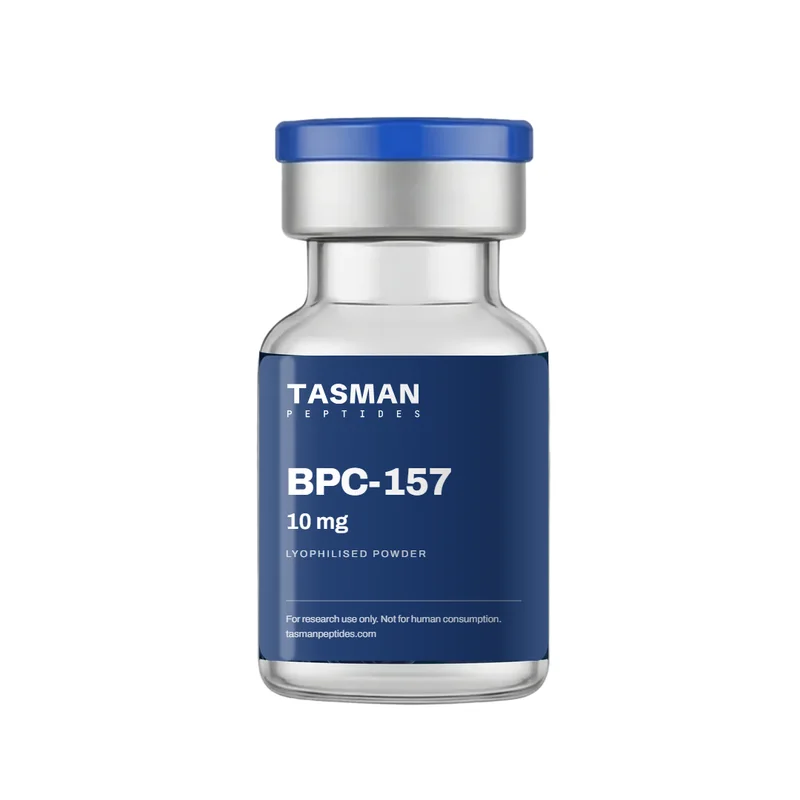
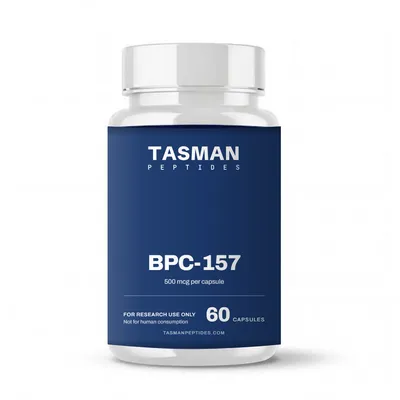
- Lyophilised powder (10 mg vial); capsules (60 × 500 mcg)
- Sizes
- 10 mg
- Storage, dry
- −20 °C, dry and dark
- Storage, mixed
- 2–8 °C, use within 28 days of mixing (as generally reported for reconstituted peptides)
- BAC water per size
- 10 mg: 2 mL
- Molecular weight
- 1419.5 g/mol
What is BPC-157?
BPC-157 is a synthetic peptide of 15 amino acids (a pentadecapeptide) derived from a protein in human gastric juice, where it is reported to be stable. The name stands for Body Protection Compound 157. Most of the published work comes from a small number of research groups, and nearly all of it is in rats and mice. Those studies cover gut injury, tendon, ligament and muscle damage, blocked blood vessels, spinal cord and nerve injury, and drug toxicity models. Reviews link its effects in these models to the nitric oxide system, VEGF and FAK signalling and new blood vessel formation. Human data are limited to three small uncontrolled reports from one author group working in private clinics. Tasman supplies BPC-157 as a lyophilised powder in 10 mg vials and as 500 mcg capsules for laboratory research.
What the research shows
| Study | Model | Dose used | Duration | Finding |
|---|---|---|---|---|
| Lee E et al.2024 · Altern Ther Health Med · PMID 39325560 | Human, uncontrolled pilot study (n=12 women with interstitial cystitis), private clinic | 10 mg total, given by injection around the inflamed area of the bladder during cystoscopy | Single procedure; follow-up period not stated in the abstract | Ten of 12 patients reported complete resolution of symptoms and 2 of 12 rated their success at 80% on the Global Response Assessment. No adverse events were reported. The study had no control group. |
| Lee E et al.2021 · Altern Ther Health Med · PMID 34324435 | Human, retrospective chart review with phone survey (n=16, knee pain) | Intra-articular BPC-157 alone (n=12) or with thymosin beta-4 (n=4); amount not stated in the abstract | Most patients surveyed 6 months to 1 year after the injection | Eleven of 12 patients given BPC-157 alone reported significant improvement in knee pain, and 14 of 16 overall reported relief. No specific tools were used to measure function or quality of life. |
| Lee E et al.2025 · Altern Ther Health Med · PMID 40131143 | Human, safety pilot (n=2 adults), private clinic | 10 mg in 250 cc normal saline over one hour on day 1, then 20 mg on day 2 (intravenous) | 3 days | The infusions produced no measurable effects on the tested heart, liver, kidney and thyroid biomarkers or blood glucose, and no side effects were reported. |
| Perovic D et al.2019 · J Orthop Surg Res · PMID 31266512 | Rat, spinal cord compression injury model | 200 or 2 μg/kg, one intraperitoneal injection 10 min after injury | Assessed at 1, 4, 7, 15, 30, 90, 180 and 360 days | All injured rats given BPC-157 showed better tail motor function, no autotomy and resolved spasticity by day 15, with less axon loss, oedema and motoneuron loss on microscopy. |
| Duzel A et al.2017 · World J Gastroenterol · PMID 29358856 | Rat, ischaemic colitis and reperfusion model | 10 μg/kg as a bath (1 mL/rat) on the blood-deprived colon segment | 15 min vessel recording; day 10 in the colon obstruction group | BPC-157 increased vessel presentation and collateral connections, and MDA and NO levels were normal in treated rats. On day 10 the obstructed segments showed almost completely spared mucosa. |
| Zivanovic-Posilovic G et al.2016 · Eur J Pharmacol · PMID 27815173 | Rat, bupivacaine cardiotoxicity model; HEK293 cells | 50 µg/kg, 10 µg/kg, 10 ng/kg or 10 pg/kg intraperitoneal, 30 min before or 1 min after bupivacaine; 1 µM in cells | Not stated in the abstract | BPC-157 largely counteracted bupivacaine-induced arrhythmias, AV block and asystole, and given after QRS prolongation it markedly postponed the fatal outcome. In HEK293 cells it inhibited bupivacaine-induced depolarisation. |
| Jelińska J et al.2026 · Int J Mol Sci · PMID 42278509 | Enzyme assay in vitro (acetylcholinesterase, modified Ellman assay) | Not stated in the abstract | Not applicable (enzyme kinetics) | BPC-157 acted as a reversible competitive acetylcholinesterase inhibitor (Ki = 0.48 mM; IC50 = 2.80 mM), with significantly lower potency than clinically used inhibitors. |
What these studies don't show: The three human reports are small, uncontrolled and from one author group: 12 patients, 16 patients by phone survey, and 2 adults. There are no randomised controlled trials in these records, and the animal work comes largely from a few research groups. Reviews in this file note that efficacy in humans is yet to be confirmed and that preparation standards are inconsistent.
Every study links to its PubMed record. See all BPC-157 studies in the research library →
BPC-157 price in Australia: 10mg vial
Buy BPC-157 in Australia in a 10mg vial, plus capsules and a starter kit. Prices are in AUD, you pay by PayID or bank transfer, and orders are dispatched from Australian stock.
| Size | Price | Per mg | BAC water (example) |
|---|---|---|---|
| 10 mg | $94.99 | $9.50/mg | 2 mL |
The BAC water column is an example volume for the maths only. Open the calculator (pre-set for BPC-157).
Other formats and kits

Is BPC-157 available in Australia?
BPC-157 is not registered on the ARTG, and no TGA-approved BPC-157 product exists. Following a scheduling decision published in May 2024, the Poisons Standard contains a Schedule 4 (prescription-only) entry for BPC-157. Tasman supplies it only as a research material for laboratory work, not for human use. Read more →
Side effects reported in studies
The two small human pilot reports that described safety found no adverse events (12 patients) and no side effects or biomarker changes (2 adults). Reviews of the animal work state that few studies report adverse reactions, but no controlled human safety trial exists in these records. Read more →
Reconstitution
| Vial | BAC water (example) | Concentration |
|---|---|---|
| 10 mg | 2 mL | 5 mg/mL |
BPC-157 FAQ
Where can I buy BPC 157 in Australia?
Tasman supplies research-grade BPC-157 from Australian stock for laboratory research only. It comes as lyophilised powder in a 10 mg vial and as capsules of 500 mcg, 60 per bottle, and it is tested by HPLC. BPC-157 is not registered on the ARTG and is not sold for human or veterinary use.
Is BPC-157 legal in Australia?
BPC-157 is not registered on the ARTG, and it has had a Schedule 4 (prescription-only) entry in the Poisons Standard since a decision published in May 2024. The TGA cited unsubstantiated human benefits, an undefined safety profile and a high risk of misuse. Tasman supplies it only as a research material for laboratory work.
How much is BPC-157 per mg?
The size table on this page lists the 10 mg vial and the 60 × 500 mcg capsule bottle, which holds 30 mg in total, so the per-mg figure for each format can be read from it. The two formats differ in total content and presentation, so their per-mg figures are not the same.
How should BPC-157 be stored?
Dry BPC-157 powder is stored at −20 °C, kept dry and away from light. Once mixed, reconstituted peptides are generally reported to be kept at 2–8 °C and used within 28 days. Capsules are kept sealed in a cool, dry, dark place.
How much bacteriostatic water goes in a 10 mg BPC-157 vial?
Using this site's neutral maths default of 1 mL per 5 mg, a 10 mg vial works out to 2 mL, giving 5 mg per mL. That figure is arithmetic only. The reconstitution calculator shows the concentration for any other volume.
What is BPC-157 studied for?
BPC-157 is mostly studied in rats and mice for injury models: gut lesions and ischaemic colitis, tendon, ligament and muscle damage, blocked blood vessels, spinal cord and nerve injury, and drug toxicity. Human data are three small uncontrolled reports on bladder pain, knee pain and intravenous safety, all from one author group.
What dose of BPC-157 was used in studies?
The rat studies here used 2 to 200 μg/kg, and one bupivacaine study went as low as 10 pg/kg. The human reports used 10 mg in a single bladder procedure and 10 mg then 20 mg by intravenous infusion. These are the doses used in those studies only, and the dosage section lists each with its source.
Has BPC-157 been tested in humans?
Only in three small uncontrolled reports from one author group working in private clinics. They covered 12 women with interstitial cystitis, 16 knee pain patients surveyed by phone, and 2 adults given intravenous infusions. None had a control group, so they cannot show whether BPC-157 caused the reported changes.
BPC-157 vs TB-500: what is the difference?
BPC-157 is a 15-amino-acid peptide derived from a gastric protein, studied mostly in rat injury models. TB-500 is a name for material related to thymosin beta-4, an actin-binding peptide studied in mouse heart, liver and lung models. The two are combined in the Wolverine blend and sold as separate vials in the Wolverine stack.
Is there a BPC-157 starter kit?
Yes. The BPC-157 starter kit pairs the 10 mg vial with the supplies used to reconstitute it for laboratory work, and the kit page lists exactly what is in the box. It is supplied for research use only, like the vial on its own.
Compare with
Related compounds
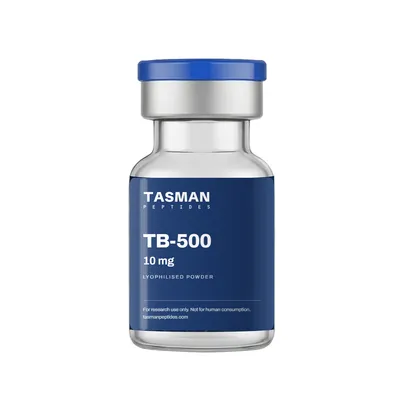
TB-500
Thymosin beta-4 related peptide (actin-binding)

Wolverine blend (BPC-157 + TB-500)
Two-peptide research blend: a gastric pentadecapeptide and a thymosin beta-4 related peptide
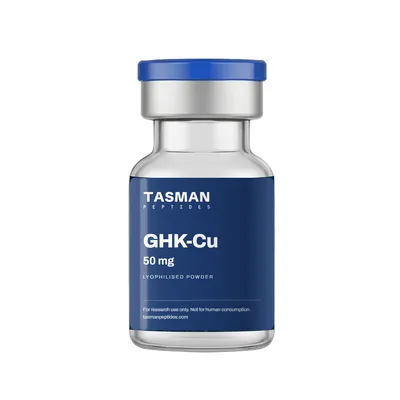
GHK-Cu
Copper-binding tripeptide (Gly-His-Lys copper complex)
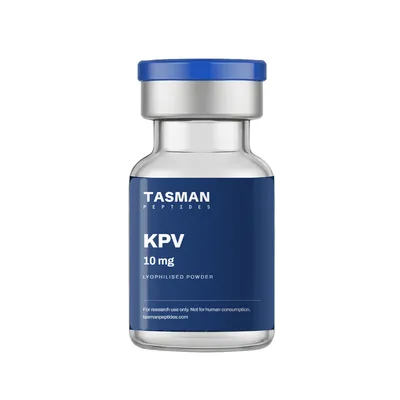
KPV
Melanocortin-derived tripeptide (C-terminal fragment of α-MSH)